
Honouring Place
The 2026 School Food Forum took place on the unceded territory of the Kanien’kehá:ka Nation.
Tiohtià:ke, today known as Montreal, has a long and important history as a gathering place. We were honoured to have the opportunity to bring people together from across the diverse First Nations, Inuit and Métis lands of what is now called Canada to discuss how to support school food environments where all students feel welcomed and nourished in body, mind and spirit and where school food can be experienced as a reflection of place and cultural vitality.
Honouring Place
The 2026 School Food Forum took place on the unceded territory of the Kanien’kehá:ka Nation.
Tiohtià:ke, today known as Montreal, has a long and important history as a gathering place. We were honoured to have the opportunity to bring people together from across the diverse First Nations, Inuit and Métis lands of what is now called Canada to discuss how to support school food environments where all students feel welcomed and nourished in body, mind and spirit and where school food can be experienced as a reflection of place and cultural vitality.
Nourishing Futures, Together
Inspired by local initiatives across the country, including many innovative examples in Quebec, School Food for All: Nourishing Futures convened over 500 school food practitioners, educators, food system community leaders, researchers, public health professionals, decision-makers, and other school food champions from a range of sectors to talk about the future of school food.
From June 2-4, 2026, in Tiohtià:ke – Montreal
Photo: Atelier cinq épices
Meet our MCs
 RACHEL CHENG is a community organizer, photographer, and writer who works at the intersection of food and culture. Born in Toronto and a second-generation Chinese-Canadian, she has lived in Tiohtià:ke/Montreal for over 18 years, working with various non-profit and community projects in the food and restaurant industry. Incorporating anti-racist and decolonial approaches into her work, she has consulted on food-related campaigns, events, exhibitions, and communications across the country. Her writing and photography have been published across Canada and internationally. Rachel works full-time for the Montreal Food System Council as a Mobilization officer.
 Katsi’tsarónkwas BROOKE RICE is a Kanien’kehá:ka Snipe Clan woman from Kahnawà:ke and founder of Tkà:nios – It Grows, a grassroots initiative dedicated to land-based learning, ancestral seeds, and traditional foodways. Her work strides towards food sovereignty and community wellness through intergenerational knowledge transference guided by13 lunar cycles of Grandmother Moon. As cultural wellness weaver she collaborates with youth, Elders, Indigenous knowledge-sharers, and cultivators to restore relationships between people, food, and land. Brooke’s vision is to build a Haudenosaunee Agri-Food Center, advancing sovereignty, reciprocity, and regeneration across food systems.
About the Hosts
Local Hosts

Le Collectif québécois pour une saine alimentation scolaire
The Quebec Chapter of the Coalition for Healthy School Food brings together more than 130 not-for-profit organizations to advocate for a universal school food program that meets the diverse needs of Quebec communities and to highlight the strong school food movement in Quebec.

Équiterre works to accelerate the transition to sustainable, equitable, and community-based food systems. With over 20 years of expertise in sustainable food and agriculture, Équiterre serves as the provincial lead for Farm to School in Quebec and is an active member and collaborator of both the CHSF and its Quebec Chapter.
National Hosts

(F2CC)’s mission is to transform how food is experienced, learned and celebrated in ALL schools across Canada. Established in 2011, F2CC has become a go-to capacity-building resource for educators, partners and funders seeking to connect students to food and food systems that nourish people and the planet.

Coalition for Healthy School Food
The Coalition for Healthy School Food (CHSF), Canada’s largest school food network with more than 500 members and endorsers across Canada, works towards the goal that every child and youth in Canada will have access to a healthy, affordable and culturally appropriate meal or snack, in a non-stigmatizing manner, at school every day.
Local Hosts
Le Collectif québécois pour une saine alimentation scolaire
The Quebec Chapter of the Coalition for Healthy School Food brings together more than 130 not-for-profit organizations to advocate for a universal school food program that meets the diverse needs of Quebec communities and to highlight the strong school food movement in Quebec.
Équiterre works to accelerate the transition to sustainable, equitable, and community-based food systems. With over 20 years of expertise in sustainable food and agriculture, Équiterre serves as the provincial lead for Farm to School in Quebec and is an active member and collaborator of both the CHSF and its Quebec Chapter.
National Hosts
(F2CC)’s mission is to transform how food is experienced, learned and celebrated in ALL schools across Canada. Established in 2011, F2CC has become a go-to capacity-building resource for educators, partners and funders seeking to connect students to food and food systems that nourish people and the planet.
Coalition for Healthy School Food
The Coalition for Healthy School Food (CHSF), Canada’s largest school food network with more than 500 members and endorsers across Canada, works towards the goal that every child and youth in Canada will have access to a healthy, affordable and culturally appropriate meal or snack, in a non-stigmatizing manner, at school every day.
For more than a decade, our organizations have partnered to drive positive change in school food across Quebec and throughout Canada. Together, we were delighted to host this gathering that will map the future of school food in Canada.
One of the most impactful things I learned at the School Food For All: Nourishing Futures Forum was the growing recognition that school food programs are not simply about addressing hunger – they are an essential investment in children’s health, learning, well-being, and long-term success. It was encouraging to see how many organizations and leaders are advocating for universal access to nutritious school meals and viewing food as a foundation for educational equity. I was also inspired by the emphasis on culturally responsive school meals. As an organization that provides African and Caribbean school lunches, it was affirming to hear the importance of ensuring that students not only receive nutritious food but also see their cultures and identities reflected in the meals they are served. This reinforced our belief that inclusive school food programs foster both healthy eating and a stronger sense of belonging for students.
Forum Objectives
Celebrate & Inspire: Celebrate recent school food achievements and inspire comprehensive program practices and models.
Connect & Learn: Create a welcoming space for diverse school food practitioners from across Quebec and Canada to learn from one another.
Plan & Motivate: Share ideas, tools and resources so that participants come away with concrete steps to advance their school food programs.
Shine a light on Indigenous school food programs: Celebrate and create space for conversation about Indigenous food and foodways in school food programs.
Forum Outcomes
Set clear direction for the school food movement across Canada and at provincial and territorial levels.
Co-create 3, 5 and 10 year goals for school food programs, including milestones along the way.
Identify the resources and next steps necessary for communities to feel empowered to bring their ideas to life and create lasting impact.

Indigenous School Food Gathering
As part of the Forum, we were honoured to host the first (to our knowledge) National Gathering on Indigenous School Food. As part of the Nourishing Indigenous Food and Foodways in Schools initiative, this event created space for knowledge-sharing and celebration to advance community visions of Indigenous food security and food sovereignty that are implemented in the school setting. This gathering was planned in collaboration with Indigenous community partners.
I was pleasantly surprised to learn about the degree of incorporation with Indigenous food sovereignty in school food programs. There were a lot more schools doing this work and interest in this topic than I expected.
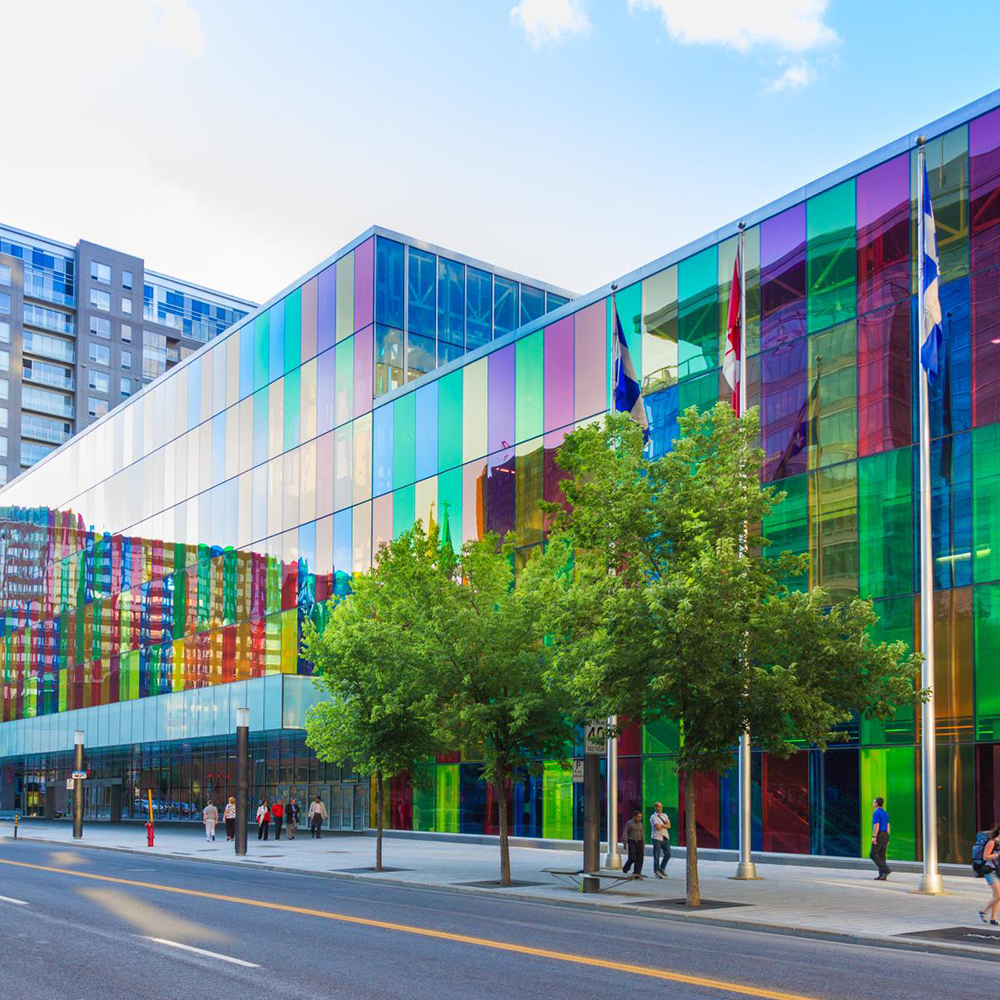
Venue
We were pleased to host School Food For All: Nourishing Futures, the 2026 Canada-Wide School Food Forum, at the Palais des Congrès de Montréal. A carbon-neutral building that supports eco-friendly event planning, this venue is located in the heart of Montreal, just 20 minutes from the airport and walking distance to many attractions, accommodations and restaurants.
Tiohtià:ke – Montreal
Palais des Congrès de Montréal
1001 Place Jean-Paul-Riopelle
Montreal, Quebec H2Z 1H5
5th floor
Tourism Information
For resources to support trip planning, please visit Explore Montréal
A Meal Rooted in Land
This menu is an invitation to experience food as more than nourishment. It is a reflection of relationship, a remembering of who we are as people of the land. Each ingredient has been thoughtfully chosen to honour both ancestral knowledge and the ways our traditional foods continue to live within our present-day diets.
At the heart of this offering is the Three Sisters soup, made from corn, beans, and squash. These relatives have sustained Haudenosaunee people for generations and still to this day, grown together in reciprocity, each supporting the other. They are more than staple foods. They are teachings of balance and interdependence, nourishing both body and spirit.
Throughout the meal, participants will encounter a blend of cultivated and original ingredients that reflect the richness of the land across seasons and territories. Fresh garden vegetables, wild rice, berries, seeds, and herbs speak to a way of eating that is grounded in biodiversity, respect, and care. Dishes featuring trout, forest spices and wild rice continue this story, bridging traditional foodways with contemporary culinary expression.
Even in the smallest details, such as maple, Labrador tea, and seasonal berries like haskap, elderberry, and serviceberry, there is a deep connection to place. These foods carry not only nutrients, but stories, medicines, and relationships that have been held for generations.
These foods are medicine. In sharing this meal together, we honour the continuity of our foodways and the importance of bringing these ingredients forward into our daily lives, as a path toward collective health and respectful relations with our Indigenous relatives who have kept these knowledge systems alive.
Planetary health on the menu
“Planetary Health is a science-based dietary pattern designed to promote human health and protect the planet, linking what we eat with how we sustain life on Earth.” – EAT Lancet
We are thrilled to offer a planetary health menu at the Canada-wide Forum School Food For All: Nourishing Futures. This menu, which promotes nutritious, sustainable and local food, was developed through a partnership between Maestro Culinaire and local co-host of the Forum, Équiterre.
A planetary health menu is nutritious, prioritizes plant-based foods, emphasizes local and sustainable sourcing, and minimizes animal-based and ultra-processed foods, all the while reducing food waste and encouraging reusable tableware. Most importantly, a planetary health menu is…delicious! We are delighted to welcome Maestro Culinaire to the Forum – they are offering a mouthwatering menu that meets all these sustainable criteria!
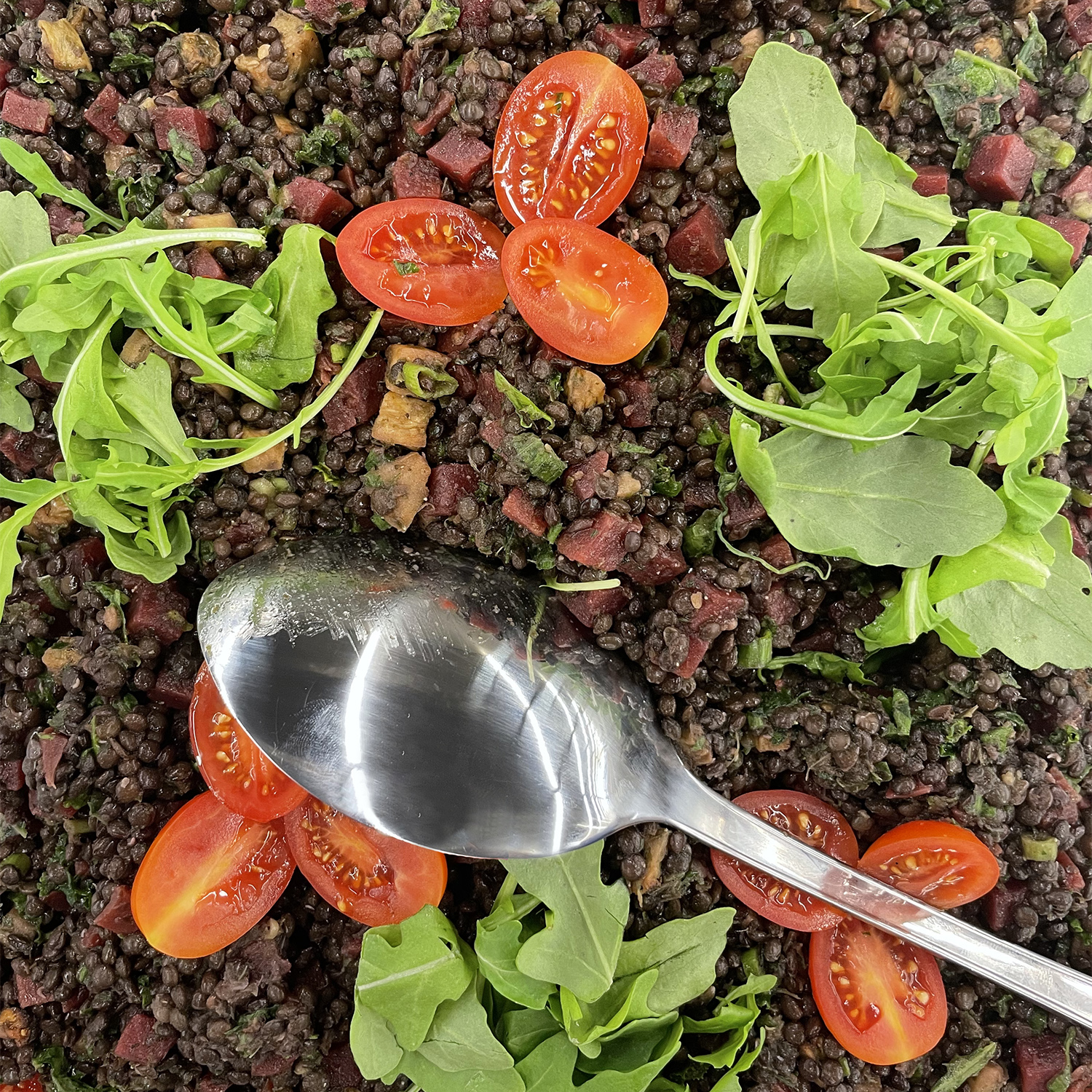
A Meal Rooted in Land
This menu is an invitation to experience food as more than nourishment. It is a reflection of relationship, a remembering of who we are as people of the land. Each ingredient has been thoughtfully chosen to honour both ancestral knowledge and the ways our traditional foods continue to live within our present-day diets.
At the heart of this offering is the Three Sisters soup, made from corn, beans, and squash. These relatives have sustained Haudenosaunee people for generations and still to this day, grown together in reciprocity, each supporting the other. They are more than staple foods. They are teachings of balance and interdependence, nourishing both body and spirit.
Throughout the meal, participants will encounter a blend of cultivated and original ingredients that reflect the richness of the land across seasons and territories. Fresh garden vegetables, wild rice, berries, seeds, and herbs speak to a way of eating that is grounded in biodiversity, respect, and care. Dishes featuring trout, forest spices and wild rice continue this story, bridging traditional foodways with contemporary culinary expression.
Even in the smallest details, such as maple, Labrador tea, and seasonal berries like haskap, elderberry, and serviceberry, there is a deep connection to place. These foods carry not only nutrients, but stories, medicines, and relationships that have been held for generations.
These foods are medicine. In sharing this meal together, we honour the continuity of our foodways and the importance of bringing these ingredients forward into our daily lives, as a path toward collective health and respectful relations with our Indigenous relatives who have kept these knowledge systems alive.
Planetary health on the menu
“Planetary Health is a science-based dietary pattern designed to promote human health and protect the planet, linking what we eat with how we sustain life on Earth.” – EAT Lancet
We are thrilled to offer a planetary health menu at the Canada-wide Forum School Food For All: Nourishing Futures. This menu, which promotes nutritious, sustainable and local food, was developed through a partnership between Maestro Culinaire and local co-host of the Forum, Équiterre.
A planetary health menu is nutritious, prioritizes plant-based foods, emphasizes local and sustainable sourcing, and minimizes animal-based and ultra-processed foods, all the while reducing food waste and encouraging reusable tableware. Most importantly, a planetary health menu is…delicious! We are delighted to welcome Maestro Culinaire to the Forum – they are offering a mouthwatering menu that meets all these sustainable criteria!
The lunches were amazing – full of colour and fruits and veggies.
I really appreciated learning about the Indigenous perspective of ‘food is medicine’. It’s also unusual and impressive to have such diverse perspectives (community, education, advocacy, research, policy etc) interacting at the same event.
Trade Table
The Trade Table at the Forum was a shared space rooted in reciprocal, relational and respectful values. Inspired by Indigenous gift economies or sacred economics.
The currency in a gift economy is relationship, which is expressed as gratitude, as interdependence and the ongoing cycles of reciprocity. A gift economy nurtures the community bonds which enhance mutual well-being; the economic unit is “we” rather than “I,” as all flourishing is mutual.
~Robin Wall Kimmerer in The Serviceberry
This table was open to participants to offer and receive in a way that helps us build community and relationships in a circular way of sharing a piece of ourselves.
We invited attendees to bring something to share on the Trade Table, which could be something along the lines of items like:
• Preserved food
• Seeds/plants
• Handmade items
• Knowledge sharing
• Educational resources/tools
Items could be something representative of the place you were joining us from, or simply something that holds meaning to you and you wished to share with others.
The Forum host organizations also contributed small items to the Trade Table. This Table was meant to serve as a participatory offering in place of the conventional event “SWAG.” In addition to honouring the gift economy, it was also our intention to reduce our environmental footprint and invite attendees to take only what they wished and felt they will use.
Well done, the Trade Table was brilliant!
Tasting razor clams at the trade table – loved the trade table in general!
Accomodations
Carrefour Sherbrooke Residence, rate of $169.00+taxes single and double occupancy, full breakfast included https://www.mcgill.ca/accommodations/summer/cs
- Single room-One queen size bed, work area, private washroom with hairdryer.
- Double room -Two queen size beds, work area, private washroom with hairdryer.
La Citadelle rate of $209.00 continental breakfast included single and double occupancy, https://www.mcgill.ca/accommodations/summer/lc
- Single room- One queen size bed, work area, private washroom.
- Double room- Two double size beds, work area, private washroom
Royal Victoria, rate of $80.00+taxes, no breakfast https://www.mcgill.ca/accommodations/summer/rvc
Offering traditional dormitory-style accommodations (featuring private guest rooms with shared bathroom and kitchen facilities).
- 1 twin bed, work area, small fridge and shared washroom. Single rooms can accommodate one guest only.
Each person will have to make their own booking by clicking on the link for each location. Cancellation for each booking is 48h in advance by emailing Reserve Residences reserve.residences@mcgill.ca
The code to use to take advantage of these preferential rates is:
School Food Forum 2026
If you prefer accommodation near the Palais des Congrès, the Hampton by Hilton Montreal Centre-Ville (985 St-Laurent Boulevard) is pleased to offer Forum participants a 15% discount on the regular rate. If you prefer this option, please follow the link below:
Please note! This link will expire on April 20th; after this date, the discount will no longer be available.
Tourist Information
If you are arriving at Pierre Elliott Trudeau Airport, you can take bus 747 to downtown Montreal. For more information, click here.
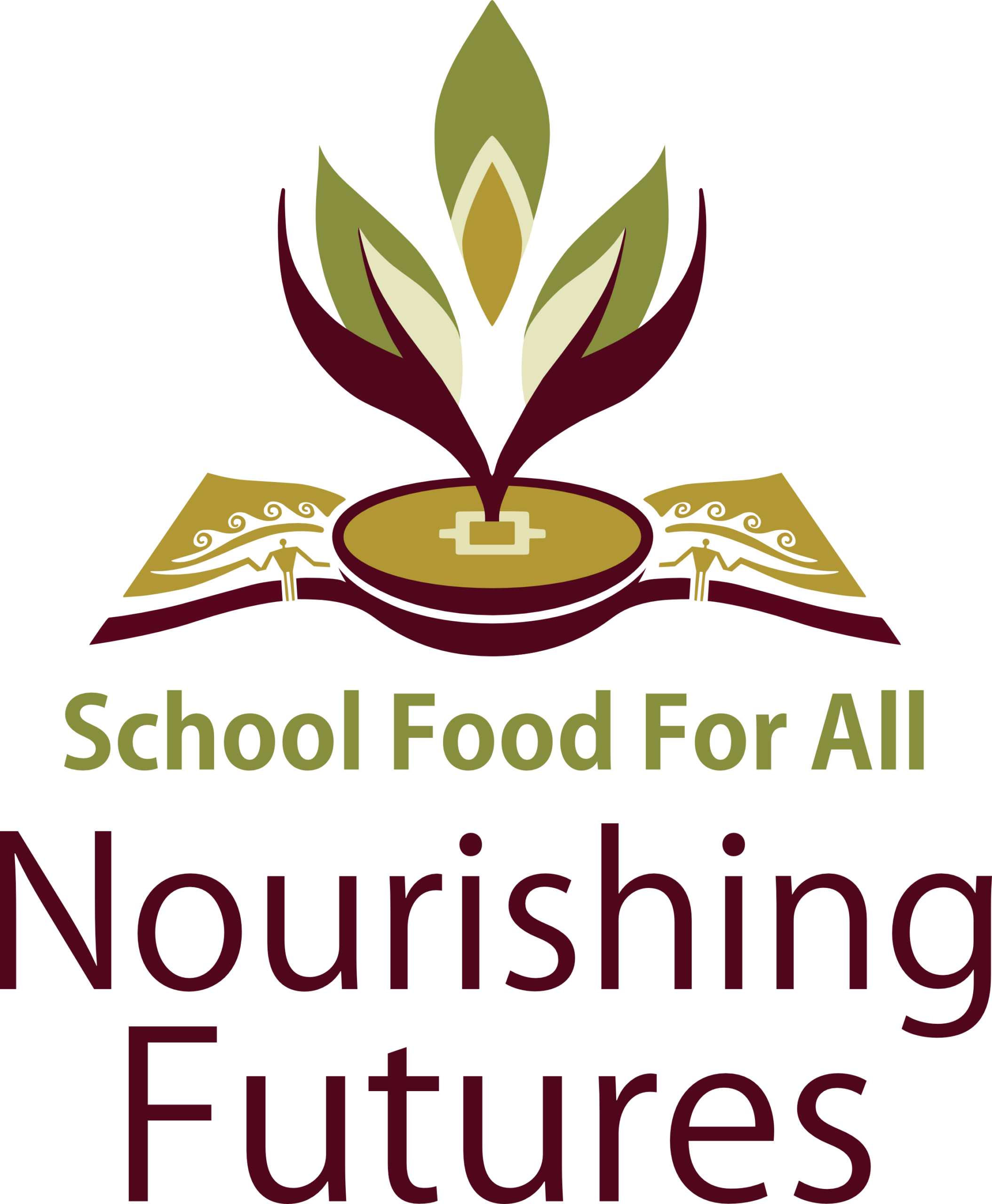
Our Logo
Nourishing Futures is grounded in Haudenosaunee symbology and the One Dish, One Spoon Wampum: a traditional law and treaty agreement between the Haudenosaunee and Anishinaabe that predates colonization and was reaffirmed in the 1701 Treaty of Albany. This teaching reminds us that all Nations share one dish, the land, and one spoon, meaning we take only what we need, use no knives, and commit to peace, restraint, and mutual care so there is always enough for others and for future generations.
The central dish in the logo represents this shared responsibility. Interconnected figures reflect unity and the collective role we ALL play in protecting the land and our foodways. Flowing water elements honor water as life, carrying memory, ceremony, and sustenance across territories. Above, seeds, roots, and growing plants rise upward, symbolizing ancestral foodways, regeneration, and the continuity of life across generations. The roots ground us in original teachings, the seeds hold future potential, and the plants reflect balanced growth guided by relationship
This work acknowledges Tiohtià:ke (Montreal) as unceded Kanien’kehá:ka territory and a gathering place of other nations such as; Anishinaabe, Abenaki and Huron-Wendat. The creation of the logo honors the opening ceremony held in Kahnawà:ke, on Kanien’kehá:ka land, affirming the One Dish, One Spoon as a living agreement that continues to guide stewardship, diplomacy, and responsibility today.
____
Ikerson Hopper a graphic designer from the Onondaga Nation, who specializes in traditional customized works in various mediums. His artistic expression includes graphic design, porcupine quillwork, beadwork, woodcarving, tattoo and apparel design. Ikerson loves creating one of a kind lifetime pieces, very rarely replicating a piece. He hopes to give insight into the Onondaga culture through his many art forms. As an inherent extension of his work, Ikerson passes along a sense of pride to be Oñgwehoñweh for the future seven generations.
Together, let’s create the best school food program in the world!
Together, let’s create the best school food program in the world!
Hosted by: